Why I’m Not Worried About AI: The New Era of the Strategic Copywriter


The year is 2026, and the "Great Content Flood" has arrived. We are currently witnessing a digital landscape where the cost of generating a string of grammatically correct sentences has dropped to near zero. For the average observer, this looked like the end of the copywriting profession. For the elite practitioner, it was the beginning of our most profitable era.
As a copywriter navigating this AI-saturated world, I’ve realized one thing: AI didn’t replace writers; it replaced the commodity of "words." If you just want words on a page, a machine can do that. But if you want an article that ranks on page one, a brand voice that resonates in a cynical market, and a content ecosystem that actually converts—you need an architect.
In this deep dive, I’m exploring the challenges we face, why the "magic button" of AI is a myth for serious brands, and exactly how I am evolving my craft to stay ahead of the curve.
The Paradox of the "Easy" Button
The Challenge of the "Sea of Sameness"
The primary challenge we face in 2026 isn't that AI is "better" than us—it’s that it’s "good enough" to be dangerous. When every brand has access to the same LLMs (Large Language Models), we see a phenomenon called the "Sea of Sameness."
AI models are trained on existing data. By definition, they are "averaging" the internet. When you ask a generic AI to write an article about "The Benefits of SaaS Integration," it looks at the top 100 results and gives you the mathematical average of them.
The Result: * Zero Innovation: It cannot provide a "hot take" or a counter-intuitive opinion.
- The Hallucination Trap: It still confidently states falsehoods that can destroy a brand’s E-E-A-T (Experience, Expertise, Authoritativeness, and Trustworthiness).
- Emotional Flatness: It lacks the "connective tissue" of human storytelling—the subtle metaphors and cultural nuances that make a reader feel seen.
As a professional, my challenge is no longer just "writing well." It is proving to clients that "good enough" content is actually a liability that can get them penalized by search engines looking for original, high-value information.

The Architecture of a Top-Ranking Article
Why AI Alone Cannot Rank
A common misconception is that if you feed a prompt into an AI, the resulting output is "SEO-ready." This couldn't be further from the truth. In 2026, Google’s algorithms are highly sophisticated; they don't just look for keywords; they look for Information Gain.
Here is the manual, strategic labor that I perform which a machine simply cannot replicate autonomously:
1. The Semantic Keyword Web
Modern SEO isn't about repeating a primary keyword 15 times. It’s about Latent Semantic Indexing (LSI) and Entity-Based SEO.
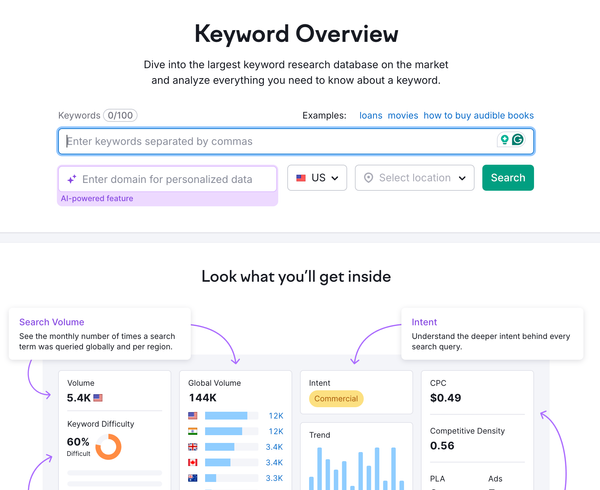
- The Human Edge: I don't just look for keywords with high volume. I look for the intent behind the search. I identify the "neighboring" topics that satisfy the user’s next three questions before they even ask them.
- The Process: I build a semantic web—connecting the primary keyword to secondary and tertiary terms that signal to search engines that this is a comprehensive, authoritative piece of "Cornerstone Content."
2. The "Top 10" Gap Analysis
Before a single word is written, I perform a forensic audit of the current top 10 ranking pages.
- AI limitation: AI can summarize what’s there, but it can’t tell you what’s missing.
- The Strategy: I look for the "white space." Are the competitors missing a video component? Is their data three years old? Are they ignoring a specific segment of the audience? I design the outline to fill these gaps, ensuring my client’s article provides Information Gain—the metric Google uses to reward content that adds something new to the web.
3. Formatting for the "F-Pattern"
Digital readers don't read; they scan.
- The Human Edge: I architect the visual flow of the article. This includes strategic use of H2 and H3 tags, bulleted lists for cognitive ease, and "pattern interrupts" like blockquotes or call-out boxes.
- The Goal: To ensure that even if a reader only spends 20 seconds on the page, they leave with the core value proposition of the brand.
4. The Internal & External Linking Ecosystem
A great article is not an island; it’s part of a continent.
- Internal Links: I strategically place links to other high-value pages on the client's site to reduce bounce rates and distribute "link juice."
- External Links: I vet high-authority sources (not just any link, but the right link) to build the article's credibility. AI often suggests broken links or low-quality sources; I curate them like a librarian.

The Soul of the Brand
Voice, Tone, and the "Uncanny Valley"
The "Uncanny Valley" is a term used in robotics to describe something that looks human but feels "off." AI-written copy often falls into this valley. It uses phrases like "In the ever-evolving landscape" or "unleash your potential"—clichés that act as a "Bore-out" for readers.
Voice of the Brand (VOB) is my specialty. A brand's voice is its personality. Is it snarky? Professional? Empathetic? Academic? AI can attempt to mimic a style, but it cannot understand the subtext of a brand’s mission. I spend hours interviewing founders and studying customer reviews to find the specific "lexicon" of the audience. I write to make people feel something, because while people might read for information, they buy based on emotion.
How AI Actually Helps (The Modern Workflow)
I am not a Luddite. I use AI every single day. But I use it as a power tool, not a replacement.
1. The Research Accelerator
I use AI to digest 50-page whitepapers into 5-page summaries. It allows me to research a topic in two hours that used to take two days. This efficiency allows me to spend more time on the "high-value" tasks: the hook, the story, and the strategy.
2. The Multi-Variant Headline Engine
I might have a great idea for a headline, but AI can give me 30 variations of it in different styles (curiosity-driven, benefit-driven, fear-based). I then use my human intuition to pick the one that will actually earn the click.
3. Coding for Non-Coders
Sometimes, an article needs a custom calculator or an interactive element to rank. I use AI to help me write the basic HTML or Schema Markup that makes the article technically superior to the competition.
My Moving Forward Plan
The Transition from "Writer" to "Content Strategist"
As we move deeper into 2026, my business model is evolving. Here is my 3-point plan for staying indispensable to my clients:
1. Focus on "Original Research" and Thought Leadership
Since AI can only recycle what’s already been said, the most valuable content now is Original Research. I am helping my clients conduct surveys, run experiments, and publish proprietary data. This creates "Un-copyable" content that naturally earns backlinks and positions the brand as a pioneer.
2. Mastering the "Human-in-the-Loop" Workflow
I am developing proprietary workflows where AI handles the data-heavy lifting, but every single output is vetted, edited, and "humanized" by me. This allows me to offer my clients scale without sacrificing soul.
3. Becoming a "Conversion Architect"
Ranking is great, but revenue is better. My focus is shifting toward the entire funnel. I’m not just writing an article; I’m designing the Lead Magnet that follows it, the email sequence that nurtures the lead, and the sales page that closes the deal. AI can write an email, but it can’t build a cohesive, multi-touch psychological journey.

The Human Advantage
The age of AI hasn't killed the copywriter; it has simply raised the bar. It has stripped away the "fluff" and forced us to return to what actually matters: Connection.
In a world full of synthetic voices, the human voice is a premium product. My commitment to my clients is to use every technological tool available to work faster and smarter—but to never lose the strategic, empathetic, and creative spark that turns a reader into a lifelong customer.
We aren't competing with the machines. We are the ones teaching them how to speak—but we're the only ones who know what to say.